


Bvostfus Python Issue Fix – Step-by-Step Troubleshooting Guide
At times, Python developers encounter unexpected errors during script execution or while installing a new library. One of the errors is the need for a Bvostfus Python issue fix. Typically, such an error freezes the Python program process and, as a result, developers do not finish their work in time.
Thanks to the knowledge of what brought about the error, developers solve it significantly quicker. Here is the exact explanation, a hint of the reasons why it happens, together with the well-thought-out solutions.
What Is the Bvostfus Python Issue Fix, and Why Does It Occur?
Simply put, the BVOSTFUS Python issue fix stands for fixing the Python errors that result from the conflicts of the environments, dependencies that are not appropriate, or installation issues. When Python is not able to find the modules it needs or when it confronts compatibility problems, it can make errors that the developers consider belonging to this issue.
Some usual reasons that may lead to it are:
- Wrong version of Python installed
- Dependencies that are either missing or are not the latest
- The virtual environment is wrongly set up
- Different libraries are creating conflicts
- Package installations that got damaged
Neglecting these aspects, developers witness their Python applications failing to run properly.
Steps to Apply the Bvostfus Python Issue Fix
There are a few straightforward steps that one can take to fix the error immediately. Essentially, these steps involve checking your environment, updating dependencies, and reinstalling packages when required.
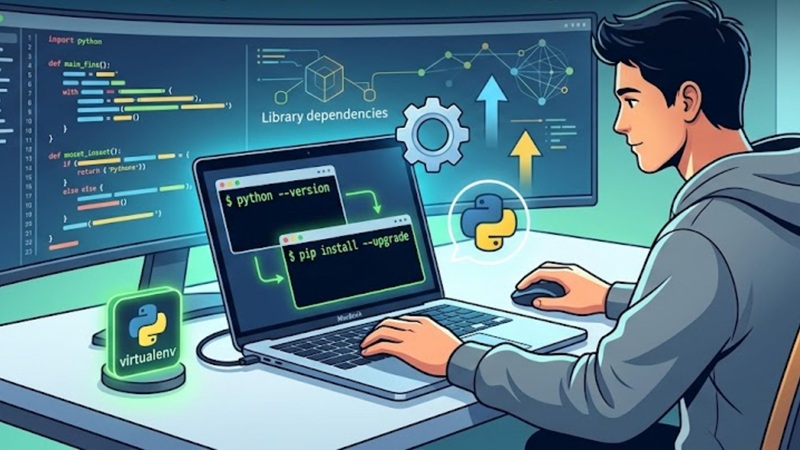
1. Verify Your Python Version
The very first thing is to ascertain that you have installed the right version of Python. Occasionally, some libraries are only compatible with specific Python versions.
Issue the following command:
python –version
Where the version does not correspond with the requirements of the project, proceed with the installation of the right version.
2. Update All Dependencies
Libraries that have not been updated are really the major cause of compatibility problems. Upgrading them is the easiest way to get the problem solved. Here is the command that you should run:
pip install –upgrade -r requirements.txt
This command is aimed at bringing the versions of all dependencies to the latest compatible ones.
3. Reinstall Problematic Packages
Many times, an installation that is corrupt leads to an error. A simple reinstall of the package that seems to be the culprit will usually fix it.
Example command:
pip uninstall package-namepip install package-name
The above sequence of commands replaces the package installation.
4. Use a Virtual Environment
Besides keeping each project’s dependencies separated, a virtual environment also helps to prevent conflicts which are caused by different packages. If you want to create a new one, just use the following commands:
python -m venv envsource env/bin/activate
It’s pretty possible that using a completely separate environment will get rid of those issues that are causing you to need a Bvostfus Python issue fix.
5. Clear the Python Cache
Python caches the files, and sometimes these cached files create conflicts. Clearing the cache is a good way to fix the errors.
In your project folder, delete the __pycache__ directories for cleaning the environment.
Best Practices to Prevent Python Issues
Ideally, preventing errors is what one should go for rather than just fixing them. Most developers manage to dodge the vast majority of problems by simply practising these best practices:
- Consistently use isolated environments (virtual environments)
- Keep all dependencies up-to-date
- Make a note of the versions of the packages
- Conduct frequent unit tests
- Keep the project structure tidy
Trying to keep oneself to these practices can dramatically minimize the risk of encountering those Python errors that necessitate a Python issue fix.
Conclusion: Bvostfus Python Issue Fix
To put it in a nutshell, the bvostfus python issue fix is about identifying clashes in the environment, upgrading your dependencies, and sticking to the correct Python setup. Most of the time, one can sort out these complications pretty fast just by checking their Python version, reinstalling packages, and taking advantage of virtual environments.
Those developers who keep good project management tend to hardly encounter recurring errors. Whenever the issues come up, knowing the right Python issue fix approach allows you to get your Python apps running without any hiccups again.