


Hybrid working has quickly moved from trend to norm across Scotland. What began as a temporary response to changing work patterns has developed into a sustainable model that allows companies to balance flexibility with collaboration and culture. Yet for hybrid work to succeed, one essential ingredient remains: a shared space where teams can unite, plan, problem-solve and build relationships. This is where a Glasgow serviced office can make a real difference.
Serviced offices give teams somewhere to meet without committing to costly long-term leases or facilities they may not use full-time. For many organisations, particularly growing Scottish SMEs, this combination of practicality and people-focused structure is helping re-energise the way they work. With businesses looking to keep their teams connected, serviced offices are quickly becoming the heart of the hybrid workplace.
A Professional Hub for a Modern Workforce
Hybrid work gives staff the freedom to choose when and where they work best whether that’s at home, in a café, or in the office. But even the most productive remote employees benefit from face-to-face collaboration. A serviced office in Glasgow offers businesses a high-quality base without the usual costs associated with renting, furnishing or maintaining a private space.
Because serviced offices are ready to move into, companies can scale up (or down) as their teams evolve. Need space for ten one month, then space for twenty the next? A serviced office can adapt to that. This flexibility is especially valuable for firms with fluctuating project teams, seasonal workloads or recruitment growth on the horizon.
Technology is another major advantage. Many serviced offices in Glasgow come equipped with high-speed internet, video-conference rooms and IT support – the kind of infrastructure remote workers often struggle to replicate at home. For hybrid teams who depend on seamless communication, having secure systems and reliable connectivity makes cross-location collaboration feel easy rather than forced.
Most importantly, a shared physical base creates a sense of unity. Whether teams gather for weekly planning sessions, brainstorming days or client meetings, the office becomes a point of alignment as a space where conversations happen naturally and decisions move faster.
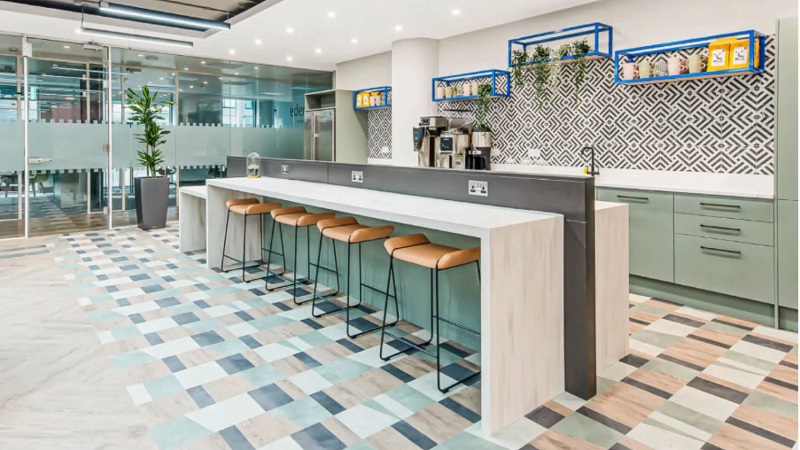
image source: https://wizuworkspace.com/
Culture, Communication and Human Connection
Hybrid working works best when people feel part of something bigger, and it’s hard to build culture through screens alone. A Glasgow serviced office offers an environment where engagement happens organically like in the kitchen, during meetings, and on the walk back from lunch. These moments strengthen trust and help maintain company identity, even when people aren’t in the same space every day.
Having a shared office location also simplifies onboarding. Instead of introducing new team members via video call, employers can welcome them into a professional environment where training, shadowing and networking feel natural. Being physically present accelerates relationship-building and gives new hires a real sense of belonging from day one.
Creative thinking also tends to thrive in shared environments. Hybrid teams can use in-office days to collaborate on complex challenges, brainstorm fresh ideas or review strategy together. While home working supports deep focus time, the office supports conversation and that combination leads to better outcomes.
A hybrid strategy anchored by a serviced office gives businesses the best of both worlds: quiet productivity at home and dynamic collaboration in person. For many Scottish companies, this balance is helping to reduce burnout, improve morale and strengthen retention as powerful benefits at a time when talent competition remains high.
Why Glasgow Is Leading Scotland’s Hybrid Future
With growing demand for roles in tech, green energy and remote-friendly sectors the need for adaptable work environments is only set to increase.
Glasgow has positioned itself at the forefront of the hybrid work movement. The city is home to a diverse business community — from tech start-ups and creative agencies to engineering firms and financial services. Many of these organisations are adopting serviced office models because they provide cost-effective space with room to grow, innovate and connect.
For fast-expanding companies, serviced offices eliminate the risk of being tied into long leases during periods of change. For established SMEs, they provide additional meeting rooms, event space and professional settings for hosting clients. For remote-first organisations, they offer something invaluable: an anchor to the team’s identity.
The future of work in Scotland will not be fully remote or fully office-based — it will be a thoughtful blend of both. Businesses that embrace hybrid structures with the support of high-quality serviced office space are already seeing the benefits, from improved teamwork to enhanced productivity.
In a landscape where connection matters more than ever, serviced offices are helping teams stay united, even when desks are spread across the city — or the country. Glasgow is proof that with the right environment, hybrid working doesn’t just function; it thrives. By combining flexibility with community, companies can work smarter, collaborate better and build a culture that lasts.

Other Articles